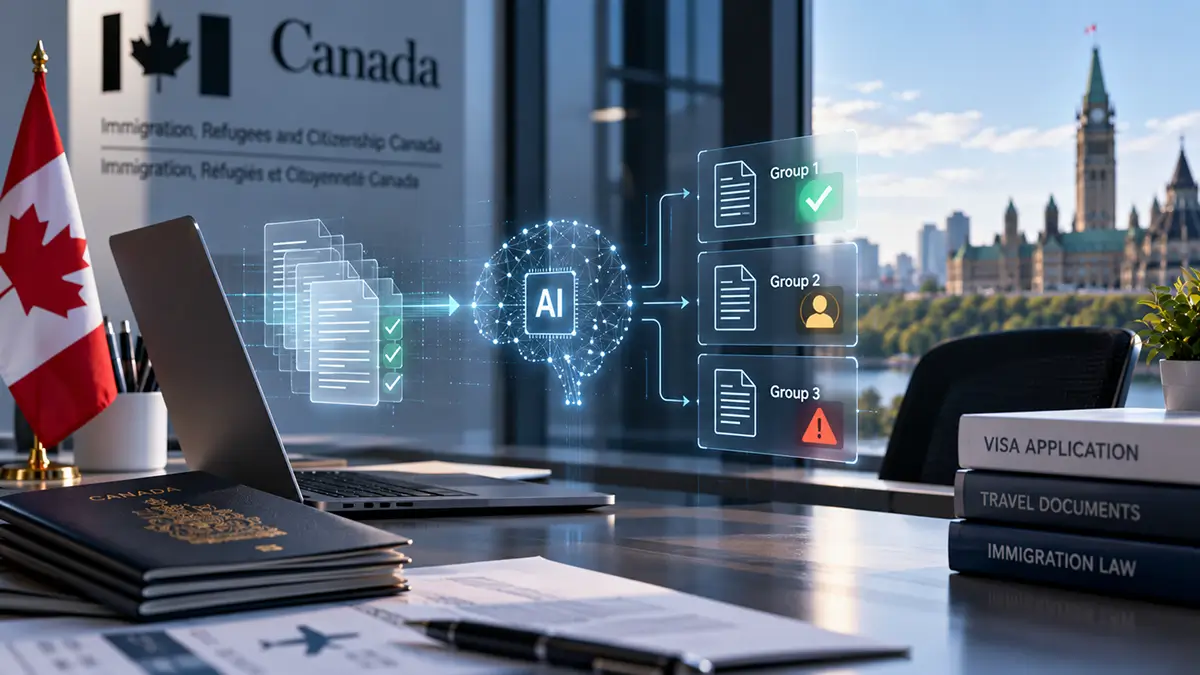
Since early 2018 IRCC has been using artificial intelligence to aid in the processing of Temporary Residence Visas (Visitor Visas). I was curious to learn more about how this is working and after an access to information request, and some discussion with IRCC I have put together a snapshot. I will give thanks to IRCC who was quite facilitative in discussing this.
How AI Processing is Deployed
IRCC is currently running a model where online TRV applications from India and China are going through AI processing. Also, more recently paper filed applications in India are going through this processing too.
Decisions are not being made autonomously by the software, but in the case of straightforward approvals, they are being recommended to an “Officer of Record” for approval pending review of admissibility (criminality, medical, security, etc.).
The AI system is not making recommendations on applications beyond easy approvals. The system groups applications into distinct tiers:
IRCC Tiers for AI Processing
Algorithmic sorting system used to categorize Temporary Resident Visa applications.
High probability of compliance, complete evidence, recommended directly to Officer of Record for fast-track clearance.
Moderate complexity files requiring standard human officer examination of financial and ties evidence.
Elevated risk indicators, previous refusals, or admissibility questions requiring in-depth human assessment.
The Secret Algorithm
The factors that the machine learner identifies to sort between groups 1, 2, and 3 are a closely guarded secret. So closely guarded in fact that officers are not aware of how these determinations are made.
“Because automated systems sort applications before human review, the precision, consistency, and organization of your supporting documents are more critical than ever.”
Professional Application Guidance
Ensure your application is thoroughly prepared with strong ties to your home country and undeniable proof of funds before submitting to IRCC.
Christopher Daw
BA, RCIC-IRB, Commissioner of Oaths — Managing Director
Christopher has represented clients in nearly every Canadian immigration stream since 2001. A former board member of CAPIC and ICCRC, he also teaches Immigration Law at Queen's University.